


March 2026 President’s Message
D.C. trip showed value of engagement, patience
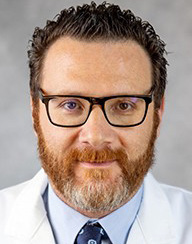
by Chady Sarraf, MD —
MSSC members Drs. Estephan Zayat, Katie Rosell, and I, along with MSSC Executive Director Phillip Brownlee, were in Washington, D.C., last month to visit members of the Kansas con- gressional delegation. The trip reinforced to me the importance of physician engagement, but also how advocacy can be a slow and frustrating process.
According to a recent MSSC survey, the three most pressing challenges facing our members are physician reimbursement rates, prior authorization requirements and workforce staffing shortages. During our advocacy meetings, our group discussed these issues with Kansas Sens. Jerry Moran and Roger Marshall, Reps. Sharice Davids and Derek Schmidt, and with a policy adviser for Rep. Ron Estes.
Prior authorization
We spent a lot of time with Sen. Marshall discussing prior-authorization reform. He is the lead sponsor of the Improving Seniors’ Timely Access to Care Act (S. 1816/H.R. 3514), which would streamline and modernize the prior-authorization process for Medicare Advantage plans.
Sen. Marshall has championed the bill for years, and it has wide bipartisan support. The Senate bill has 66 co-sponsors, and the House version has 259 co-sponsors. All five other members of the Kansas delegation are co-sponsors. Despite the majority support, the bills remain stuck in committee. It appears insurance companies are working behind the scenes to keep the legislation bottled up.
The bill is a case study on how the wheels of government turn slowly ‑ especially if big-money interests are gumming up the gears. But it also shows why it is important that lawmakers hear from physicians to counteract these interests and keep the pressure on lawmakers to act.
Medicare reimbursement
We also discussed how low Medicare reimbursement rates make it increasingly difficult for senior citizens to access needed medical care. Adjusted for inflation, the value of Medicare physician reimbursements has fallen 33% since 2001. As a result, many physicians limit or don’t take new Medicare patients. An MSSC survey last year of primary care practices found that, not including safety-net clinics and residency programs, less than 13% of practices were accepting new Medicare patients.
Even when Congress intervenes and improves an increase, it doesn’t always lead to higher payments to physicians. For example, Congress approved a 2.5% fee increase for 2026, but then the CMS 2026 fee schedule included “efficiency adjustments” that reduced payments for many procedures by more than 2.5%, wiping out the rate increase for many physicians.
At the urging of MSSC member Jay Gilbaugh, MD, Rep. Estes recently introduced H.R. 7520 to delay implementation of this adjustment until it is more targeted and thoughtful. We encourage the rest of the delegation to support this commonsense legislation.
Staffing costs, availability
Another major concern of MSSC members is staffing. This includes both cost and availability. One specific concern we discussed was the $100,000 fee the Trump administration wants to impose on H-1B visa applications. Many internationally trained physicians and nurses come to the U.S. on an H-1B visa, and the new fee could make it difficult to fill critical positions, especially in rural Kansas. The White House indicated physicians would be exempt from the fee, but so far that has not been formalized. Rep. Davids said she signed a letter to the administration urging such an exemption, and we encouraged other delegation members to actively support this.
Noteworthy speakers
The day before our Capitol Hill visits, we attended an AMA ad- vocacy conference that provided a good overview of the political dynamics in Congress. In addition to members of Congress and AMA leaders (including President Bobby Mukkamala, MD, whom we invited to come to Wichita), two of the speakers were particularly noteworthy: Sanjay Gupta, MD, and Mark Cuban.
Gupta, a practicing neurosurgeon, is the chief medical correspondent for CNN. He shared how he began working in media and some of the most notable moments in his reporting. He also discussed the role of physician voices in shaping trust in medicine.
Cuban is a billionaire entrepreneur and co-founder of Cost Plus Drugs, a low-cost online pharmacy that brought more transparency to prescription drug pricing. As is typical for him, Cuban was outspoken and provocative ‑ but also a champion of independent physicians, who he argued were underpaid and overworked. Among his disruptive ideas was making medical school free.
 Oh, and the Olympic hockey team
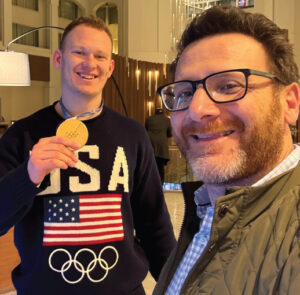
Although unrelated to healthcare, I must mention a fun moment from the trip: Members of the U.S. men’s Olympic hockey team were staying in our hotel while in D.C. for the State of the Union Address. It was great running into them in the lobby (medals around their necks), graciously posing for selfies with fans like me.
A long and winding road
Advocacy is often slow and frustrating, but it is essential if physicians want their voices heard where decisions are made. Federal and state lawmakers shape policies that directly affect how we practice medicine and how our patients access care. When we engage ‑ through meetings, testimony, or organizations like MSSC and the Kansas Medical Society ó we bring frontline insight that policymakers cannot get from reports or insurance lobbyists.
I also believe our next step should be empowering our patients to share their own struggles accessing care. Their voices and real-life experiences can be powerful in helping legislators understand the human impact of the policies they shape.